
Articles & Resources
Thoughtful guidance for caregivers, families, aging adults, and professionals navigating care decisions, dementia, planning, advocacy, and the real-life moments that come with aging.
Support before the crisis. Clarity during the hard parts.
The KSH Journal is a collection of practical insight, honest reflection, and education designed to help families feel less overwhelmed and more prepared.
Explore articles on caregiving, dementia communication, aging readiness, family decision-making, senior living, advocacy, and planning before panic takes over.
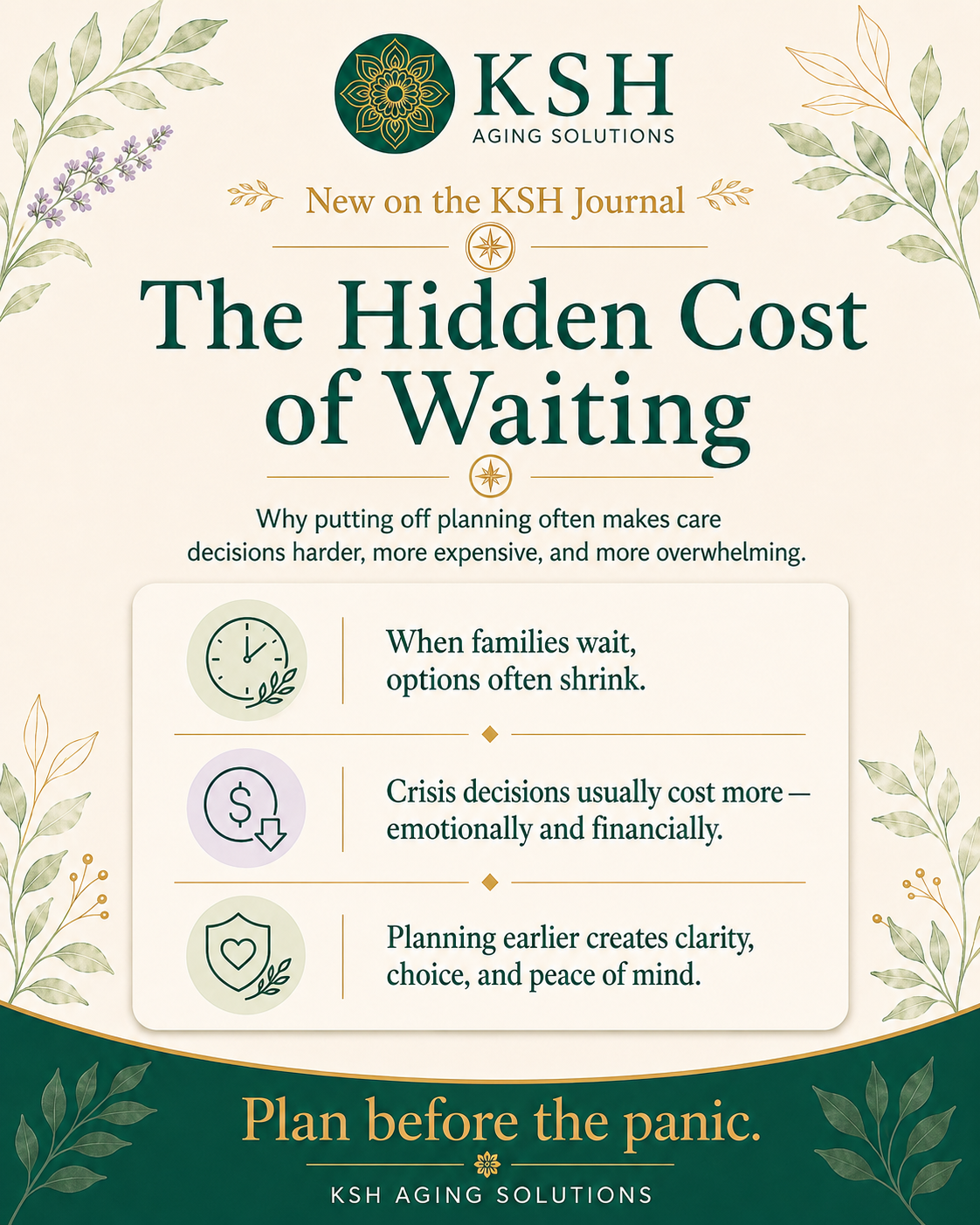
The Hidden Cost of Waiting Until There’s a Crisis
“We’ll deal with it when we have to.”
I hear this all the time from families. And I get it. Aging planning is uncomfortable.
But waiting does not make the problem smaller. It usually makes the options smaller, the costs higher, the emotions louder, and the decisions messier.
A crisis does not create the planning problem. It exposes the one that was already there.
This blog is for the families who keep saying “not yet,” “things are fine for now,” or “we’ll figure it out later.”
Because planning does not mean making every decision today. It means asking the right questions while you still have options.
From Guilt to Guidance: Creating Your Caregiver Values
Reduce guilt and gain clarity in caregiving by creating a set of Caregiver Values. Learn how values guide tough choices with love and confidence.

Understanding the T.E.L.L.S. Method™: A Roadmap for Responding to Challenging Behaviors with Empathy and Insight
The T.E.L.L.S.™ Method is a simple, trauma-informed framework that helps caregivers understand and respond to challenging behaviors in five clear stages: Trigger, Early Signs, Level of Escalation, Loss of Control, and Settle/Shutdown. Learn how to shift from reacting to connecting because every behavior tells a story.

“Am I Really a Caregiver?” Redefining What It Means to Be the One Who Shows Up
“You may not see yourself as a caregiver—but if you’re the first person your aging loved one calls, if you’re constantly rearranging your day to check in, drive to appointments, or handle the latest crisis—you are one. Caregiving doesn’t always look like medical scrubs and full-time hours. Sometimes, it looks like quietly carrying the weight of someone else’s well-being while juggling your own life.”